
Kidney stone pain is hard to ignore. It often starts suddenly in the back or side, spreads towards the lower abdomen or groin, and comes in waves that make it impossible to sit still.
The good news is that many kidney stones don't need surgery. Treatment depends mostly on the stone's size, its position, and whether it's blocking urine flow or causing infection.
This guide walks through the full journey: symptoms, diagnosis, medicines, procedures, surgery and prevention. It also explains when to see a urologist in Islamabad.
Key takeaways
- Small stones often pass on their own. Studies pooled in AUA/EAU guidelines found about 68% of stones 5 mm or smaller pass without surgery, falling to about 47% for stones between 5 and 10 mm.
- For stones up to 10 mm in the lower ureter, urology guidelines recommend medicine to help the stone pass for about 30 days.
- Larger stones, or stones that don't move, are usually treated with shock wave lithotripsy, ureteroscopy or PCNL, not open surgery.
- Fever with kidney stone pain is an emergency. A blocked, infected kidney needs urgent drainage.
What Are the Symptoms of a Kidney Stone?
The most common symptom is severe pain in the back or side, below the ribs. It often travels to the lower abdomen or groin, and it usually comes in waves rather than staying steady.
Other common symptoms include:
- Blood in the urine, which can look pink, red or brown
- Nausea or vomiting
- Frequent urination or a burning feeling when passing urine
- Feeling the need to urinate urgently but passing only small amounts
- Cloudy or foul-smelling urine, which can signal infection
Some stones cause no symptoms at all. They're found by chance on an ultrasound done for another reason. Even these "silent" stones should be reviewed by a urologist, because some grow over time or start moving.
Kidney stones are common in Pakistan. Researchers link the high burden to the hot climate, dietary patterns and limited access to care (Sindh Institute of Urology and Transplantation study, 2025). In Islamabad and Rawalpindi summers, dehydration makes things worse.
When Is Kidney Stone Pain an Emergency?
Go to an emergency department straight away if stone pain comes with any of the following:
- Fever, chills or shivering
- Vomiting that stops you keeping fluids or medicines down
- Very little or no urine
- Pain that painkillers don't control
- A known single kidney, or you're pregnant
Fever is the most important warning sign. A stone that blocks the kidney while urine is infected can quickly lead to sepsis. The American Urological Association (AUA) says clinicians should drain the kidney urgently in this situation, using either a ureteral stent or a nephrostomy tube (AUA Guideline, 2025). The stone itself is usually treated later, once the infection has cleared.
Reliance Hospital's Emergency Department is open 24 hours a day, with an on-site STAT lab for urgent blood tests. For more on infection-related emergencies, read our guide on sepsis treatment and critical care.
How Are Kidney Stones Diagnosed?
A urologist confirms a kidney stone with imaging and urine tests. The aim is to find out three things: how big the stone is, where it sits, and whether it's blocking the kidney.
Common tests include:
- Urine test: checks for blood, infection and crystals
- Blood tests: check kidney function (creatinine) and signs of infection
- Ultrasound: radiation-free, and useful for spotting stones and kidney swelling
- X-ray (KUB): shows many stone types and helps track them over time
- Non-contrast CT scan: the most accurate test for a stone's size and position
Your doctor will choose the tests that fit your situation. Pregnant women and children, for example, usually start with ultrasound. Reliance Hospital's Radiology and Imaging Services handle imaging in the same building as the Urology Department.
If you pass a stone, keep it and bring it to your appointment. Stone analysis shows what it's made of, which shapes your prevention plan.
Can a Kidney Stone Pass on Its Own?
Yes, many can. Size is the biggest factor. In the pooled AUA/EAU guideline data, about 68% of stones 5 mm or smaller passed without surgery. That fell to about 47% for stones between 5 and 10 mm (Canadian Urological Association Journal review).
Position matters too. A stone already low in the ureter, close to the bladder, is more likely to pass than one higher up.
Passing a stone can take time. Some take a few days; others take several weeks. That's why follow-up imaging is important if you don't see the stone come out. A stone that stays stuck can slowly damage the kidney even after the pain settles.
So when is waiting reasonable? Generally when the stone is small, the pain is controlled, kidney function is normal and there's no infection. Your urologist will decide this after reviewing your scans.
What Medicines Are Used for Kidney Stones?
Medicines for kidney stones do three jobs: control pain, help the stone pass, and stop new stones forming. They don't break up a calcium stone, which is the most common type.
Pain relief
Anti-inflammatory painkillers are usually the first choice for stone pain. Your doctor may also prescribe anti-nausea medicine. Don't take painkillers for long periods without advice, especially if your kidney function is reduced.
Medicine to help the stone pass
Doctors often prescribe an alpha-blocker, such as tamsulosin, to relax the ureter so the stone moves more easily. This is called medical expulsive therapy (MET).
The AUA strongly recommends offering MET for about 30 days for stones of 10 mm or smaller in the lower ureter (AUA Guideline, 2025). In a large meta-analysis, patients given alpha-blockers were 65% more likely to pass their stone than those who weren't (Canadian Urological Association Journal).
Take these medicines only on a doctor's prescription. They can lower blood pressure and cause dizziness.
Can medicine dissolve a kidney stone?
Only certain stone types. Uric acid stones can sometimes be dissolved with medicine that makes urine less acidic. Calcium stones, which are far more common, can't be dissolved this way.
Be cautious about syrups or remedies promising to "dissolve" any stone. Relying on them can delay proper treatment while a stuck stone damages the kidney.
Which Procedures Are Used to Remove Kidney Stones?
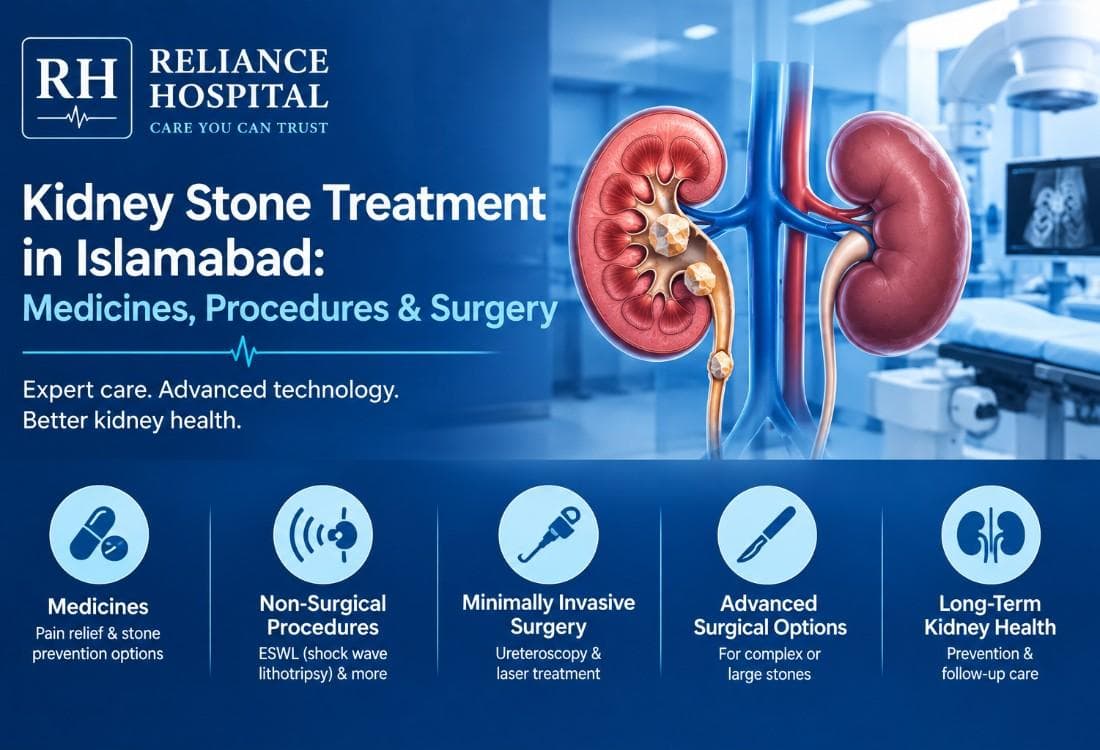
Most stones that need removal are treated with minimally invasive procedures, not open surgery. The three main options are shock wave lithotripsy, ureteroscopy and percutaneous nephrolithotomy (PCNL). The right choice depends on the stone's size, type and position, and on your health.
| Procedure | How It Works | Typically Used For | Incision? |
|---|---|---|---|
| Shock wave lithotripsy (ESWL / SWL) | Shock waves from outside the body break the stone into fragments that pass in urine | Smaller kidney stones; up to about 1.5 cm is widely accepted as first-line | No |
| Ureteroscopy (URS) with laser | A thin scope passes through the urinary passage; a laser breaks the stone and fragments are removed | Stones in the ureter; many kidney stones via flexible scopes (RIRS) | No |
| Percutaneous nephrolithotomy (PCNL) | A small keyhole in the back gives direct access to the kidney to break and remove the stone | Large, complex or irregular kidney stones | Small keyhole |
Shock wave lithotripsy (ESWL)
ESWL uses focused shock waves from outside the body, so there's no cut. The fragments then pass in your urine over the following days or weeks (NIDDK). It works best for smaller stones, and results vary with stone density, position and body weight. Some patients need more than one session.
Ureteroscopy (URS) and RIRS
In ureteroscopy, the urologist passes a thin scope through the urethra and bladder into the ureter or kidney. A laser breaks the stone and the pieces are removed. When a flexible scope is used to reach stones inside the kidney, it's called retrograde intrarenal surgery (RIRS).
A temporary ureteral stent is often placed afterwards to help urine drain while swelling settles. Stents can cause mild discomfort or frequent urination until they're removed. Ask your urologist how long yours will stay in.
Percutaneous nephrolithotomy (PCNL)
PCNL treats large or complex kidney stones through a small incision in the back. It's typically used for very large or irregular stones, or when other methods aren't suitable. It needs general anaesthesia and a short hospital stay, often two to three days (National Kidney Foundation).
When Is Kidney Stone Surgery Needed?
Your urologist is likely to recommend a procedure when:
- The stone is too large to pass on its own
- The stone hasn't moved after a reasonable trial of medicine
- Pain keeps coming back or can't be controlled
- The stone is blocking the kidney or affecting kidney function
- You have repeated infections linked to the stone
- Your job or travel makes waiting risky, such as for pilots or frequent travellers
Open surgery for stones is now rare. It's mostly kept for unusual cases where keyhole and scope-based methods aren't feasible.
Reliance Hospital's Operation Theatre complex has three operating rooms equipped with a C-arm, an endoscope and a laparoscopic tower. It's connected directly to the surgical ICU for patients who need closer monitoring after a procedure. Patients admitted after treatment recover in the Inpatient Department.
How Much Does Kidney Stone Treatment Cost in Islamabad?
The cost depends on what treatment you actually need, so there's no single price. A stone that passes with medicine costs far less than one that needs a laser procedure and a stent.
The main factors that affect the total are:
- Consultation: a urology consultation at Reliance Hospital is listed at PKR 2,500
- Tests: urine and blood tests, ultrasound, X-ray or CT scan
- Procedure type: ESWL, ureteroscopy or PCNL
- Stent: whether one is placed, and the later removal
- Anaesthesia and theatre charges
- Hospital stay: none for many procedures; a few days for PCNL
- Room category if you're admitted
The most useful step is to get your imaging done and consult a urologist. Once the stone's size and position are known, ask for a written estimate that lists what's included. For how the hospital's charges are structured, see our guide to Reliance Hospital charges.
How Can You Prevent Kidney Stones Coming Back?
Kidney stones often return. Recurrence rates can reach 50% within five to ten years (SIUT study, 2025), so prevention matters once you've had one.
The most effective habit is drinking enough fluid. Urology guidelines advise enough fluid to produce at least 2.5 litres of urine a day. In Islamabad's summer heat, or if you work outdoors, you'll need more water to reach that.
Other steps that help:
- Cut down on added salt and heavily processed foods
- Don't overdo animal protein
- Keep normal calcium in your diet rather than cutting it out, unless your doctor advises otherwise
- Maintain a healthy weight
- Follow any specific diet or medicine your doctor gives you based on your stone type
Prevention works best when it's tailored to your stone type and urine tests. The Diet and Nutrition team can help build a practical eating plan. If stones have affected your kidney function, the Nephrology Department can review your long-term kidney health.
When Should You See a Urologist for Kidney Stones?
See a urologist if you've had stone pain, blood in your urine, or a stone found on a scan, even if the pain has settled. A stone that has stopped hurting hasn't necessarily passed.
A urologist is the right specialist because they manage the whole pathway: diagnosis, medicines, procedures and prevention. Book sooner if you've had stones before, have one kidney, or have diabetes, high blood pressure or reduced kidney function.
Dr. Faraz Munir Butt (MBBS, MS) consults in the Urology Department at Reliance Hospital, Monday to Friday, 7:30 PM to 9:00 PM. His profile lists conservative and surgical management of stone disease and urinary problems among his areas of practice. The evening clinic suits patients who can't take time off during the day.
Bring these to your first appointment:
- Any previous ultrasound, X-ray or CT reports and images
- Recent urine and blood test results
- A list of your current medicines
- The stone itself, if you've passed one
Frequently Asked Questions
What size kidney stone can pass naturally?
Stones 5 mm or smaller often pass on their own. In pooled guideline data, about 68% of these passed without surgery, falling to about 47% for stones between 5 and 10 mm. Stones larger than 10 mm usually need a procedure.
Which doctor treats kidney stones in Islamabad?
A urologist treats kidney stones. At Reliance Hospital, Bahria Town, the Urology Department provides diagnosis, medical treatment and procedures for kidney stones. Dr. Faraz Munir Butt consults Monday to Friday evenings, and the consultation fee is listed at PKR 2,500.
Is kidney stone removal painful?
Stone removal procedures are done under anaesthesia, so you shouldn't feel pain during them. Afterwards, you may have some discomfort, and a stent can cause frequent urination until it's removed. PCNL usually needs a hospital stay of two to three days.
Can I treat a kidney stone at home?
Small stones with controlled pain and no fever may pass at home with medicine and fluids, under a doctor's supervision. Follow-up imaging confirms the stone has passed. Fever, vomiting or reduced urine needs emergency care, because a blocked infected kidney can become dangerous quickly.
How much does kidney stone surgery cost in Islamabad?
The cost depends on the procedure, tests, stent use, anaesthesia and hospital stay. A urology consultation at Reliance Hospital is listed at PKR 2,500. After reviewing your scans, the urologist can recommend a treatment and the hospital can provide a written estimate.
Do kidney stones come back?
They often do. Studies report recurrence rates of up to 50% within five to ten years. Drinking enough fluid to produce at least 2.5 litres of urine daily, reducing salt, and following a plan based on your stone type all lower the risk.
Book a Kidney Stone Consultation in Islamabad
If you have stone pain, blood in your urine, or a stone found on a scan, a urology consultation is the right next step. Early assessment can save you from repeated pain episodes and protect your kidney function.
Reliance Hospital is at 131 Block C, Civic Center, Bahria Town, Islamabad, and serves patients from Bahria Town, DHA, PWD and nearby areas of Rawalpindi.
- Call: 051 5732855
- Book online: request an appointment
- Emergency: our 24/7 emergency department is open around the clock
This article is for general information and isn't a substitute for medical advice. Treatment decisions should be made with a qualified urologist after examination and investigations.
Last updated: September 2026