
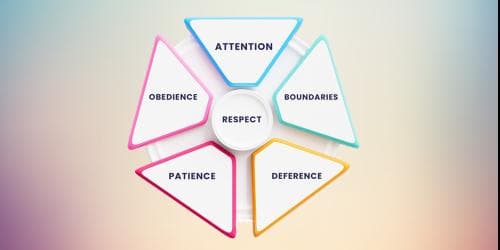
As already discussed previously that respect is not just an emotion; it is a deliberate and observable practice reflected through various behaviors and attitudes. Recognizing these behaviors can deepen our understanding of how we manifest respect in different contexts. This article will explore five key indicators of respect: Attention, Obedience, Patience, Deference and Boundaries & Limits.
1. Attention: The Foundation of Respect
Attention is one of the primary
ways to show respect. By giving our full focus to someone, we acknowledge their
value and validate their presence. Respectful attention can be expressed
through:
·
Active Listening: Engaging with others by truly hearing their words
without interruption or distraction is a powerful signal of respect. This
requires putting aside personal thoughts and focusing entirely on the speaker.
·
Non-Verbal Cues: Eye contact, nodding, and body language convey
attentiveness and interest. These small actions reflect that you respect the
other person's thoughts and presence.
·
Mindfulness in Interaction:
Being fully present in a conversation, free from distractions like phones or
unrelated tasks, shows that you are prioritizing the other person.
In essence, attention as an indicator of
respect highlights how much value we place on someone by acknowledging their
presence and opinions. It goes beyond mere politeness to a deeper recognition
of their significance in that moment.
2. Obedience: Respect in Relationships
Obedience is another crucial
indicator of respect, particularly in hierarchical or mentor-mentee
relationships. It is the act of adhering to the guidance, instructions, or
wishes of someone we respect. Obedience can manifest differently across
relationships:
·
In Families: Children demonstrate respect towards their parents
through obedience. Parents' advice is followed because of the recognition of
their wisdom and experience.
·
In Workplaces: Employees
exhibit respect by obeying their supervisors or mentors. This does not imply
blind compliance but thoughtful adherence to directives, recognizing the
authority or expertise of the individual.
·
In Societies: Citizens obey laws and regulations as a sign of
respect for societal structures and the collective well-being. This obedience
stems from understanding the shared value systems that guide social order.
Respectful obedience is always
aligned with trust. It reflects the mutual understanding that the individual
being obeyed has the experience, knowledge, or authority necessary to guide
actions.
3. Patience: An Essential Marker of Respect
Patience is a profound indicator
of respect, especially in how we respond to the actions and words of others. In
contexts where respect is paramount, patience becomes a tool to navigate
potentially challenging interactions:
·
In Reactions: When faced with a situation that might provoke
frustration or irritation, showing patience is a way to respect the individual
by controlling impulsive reactions.
·
Alternative Timelines: Respect for others often involves giving
them the time they need to process, respond, or perform. Rushing someone
disrespects their process, while allowing flexibility respects their
individuality.
·
Alternative Responses: Offering alternative ways for someone to
accomplish a task or express themselves—without insisting on your way—shows
patience and respect for their personal preferences.
In many respects, patience
requires the ability to manage emotions like frustration, impatience, and
disappointment. By doing so, we allow the other person the space to exist and
act in ways that suit them, which is a profound act of respect.
4. Deference:
A Priceless indicator of Respect
Deference involves giving more weight and
consideration to the opinions, judgments, or preferences of someone we respect.
It’s not about submitting to others blindly but recognizing their authority,
wisdom, or experience and allowing their input to guide decisions. Deference is
expressed in the following ways:
·
Recognizing Expertise:
We defer to individuals with more knowledge or experience in specific areas,
acknowledging their specialized understanding. For instance, in professional
settings, employees may defer to their seniors or subject-matter experts.
·
Valuing another’s
Perspective: Even when there is no hierarchy, deference can still be a sign
of respect in peer relationships. This involves giving serious consideration to
another's viewpoint, even if it differs from our own, and letting their opinion
shape the outcome of discussions.
· Ceding Space in
Decision-Making: Deference can mean stepping back and allowing someone
else’s judgment to take precedence in decisions that affect both parties. It is
an acknowledgment of trust in the other person’s capability or perspective.
·
Deference in Personal
Matters: Even in personal matters where no one else is affected, deference
can play a role in demonstrating respect. By choosing to follow the opinion or
advice of someone you respect, even when the decision impacts only yourself,
you show deep regard for their insight. This is not about diminishing your
autonomy but rather about elevating the trusted perspective of someone valued
in your life. In such cases, deference becomes a personal gesture of esteem,
signifying that you place substantial value on their input, even when it
concerns a choice that primarily affects you.
Deference strengthens relationships by fostering mutual trust and recognition. It shows that we value the other person’s insight and are willing to honor it in practice. This indicator of respect allows for a balance of opinions and strengthens collective decision-making, whether in professional settings, peer dynamics, or personal choices.
5. Boundaries & Limits: Navigating Respect through Space
Respect often requires careful
negotiation of personal boundaries. Respecting others involves both allowing
them into our personal space and being mindful not to overstep theirs:
·
Expanding Boundaries for Those We Respect: Respect for someone may
mean allowing them more access to personal thoughts, emotions, or spaces that
are usually off-limits. This expansion of personal boundaries is a gesture that
conveys trust and admiration.
·
Abiding by Others’ Boundaries: Conversely, respect also means
understanding and adhering to the limits set by others. Whether physical,
emotional, or intellectual boundaries, breaking them undermines the respect we
should exhibit.
Respecting boundaries requires
emotional regulation, particularly when boundaries feel restrictive. Patience
and understanding become vital here, especially when those we respect enter our
personal boundaries. We must practice restraint, recognizing that respect often
requires tolerance of discomfort.
Conclusion
The indicators of
respect—Attention, Obedience, Patience, and Boundaries & Limits—are
manifestations of a deeper cognitive decision rather than spontaneous emotions.
These indicators offer a framework for recognizing respect in everyday
interactions and highlight the intentional behaviors that cultivate respectful
relationships. Whether in personal, professional, or societal contexts, these
elements create the foundation of harmonious and mutually respectful
environments.